Wondering whether a newer subdivision or an established street is the better fit in Pelham? You are not alone. For many buyers, this choice shapes your daily routine, your maintenance budget, and how a home feels long after move-in day. The good news is that Pelham offers a real mix of both, so you can match your home search to your priorities instead of forcing a one-size-fits-all decision. Let’s break down what each option can offer and how to decide.
Why this choice matters in Pelham
Pelham has a varied housing stock, which makes this decision especially relevant. City planning data shows that about 36% of homes were built after 2000, 29% were built from 1990 to 1999, and 35% were built before 1980. In other words, you are not choosing between tiny pockets of old or new homes. You are choosing between two meaningful parts of the local market.
Pelham is also a city designed for both growth and reinvestment. The city’s planning approach supports new development while also encouraging continued attention to existing neighborhoods and business areas. That balance gives buyers more flexibility, whether you want something more turnkey or something with room to personalize over time.
What newer subdivisions often offer
If you want a more predictable setup, newer subdivisions in Pelham may feel easier to evaluate. The city’s 2025 subdivision regulations require features like sidewalks, grass strips between the street and sidewalk, and developer-provided street lighting at intersections, cul-de-sacs, and roughly every 300 feet. New subdivisions must also provide sanitary sewer, water distribution, and hydrants before paving.
That means newer neighborhoods are more likely to feel standardized and planned from the start. You may notice more uniform lot shapes, more consistent street design, and a more pedestrian-oriented layout than on many older streets. For some buyers, that consistency creates peace of mind.
Benefits of newer subdivisions
Newer subdivision homes can be a strong fit if your goal is convenience and fewer near-term projects. If you are juggling work, family logistics, or a relocation, a home that feels move-in ready can be a major advantage.
Common reasons buyers lean toward newer subdivisions include:
- Lower likelihood of immediate repair projects
- More consistent sidewalks and street lighting
- More uniform lot and street design
- Infrastructure installed to current subdivision standards
- A more planned overall neighborhood feel
Pelham’s building department also uses current code sets, including the 2021 International Residential Code and related codes. While every home is different, newer homes often reduce the chance that you will need a major update soon after closing.
Tradeoffs to keep in mind
Newer does not automatically mean better for every buyer. Some buyers find that newer subdivisions can feel more standardized in layout, lot shape, and streetscape. If you want a home with more variation from one property to the next, a newer subdivision may not always deliver that.
You should also think beyond the house itself. If your favorite parts of Pelham involve specific parks, shopping areas, or commute patterns, the best newer option still needs to work for your daily life.
What established streets often offer
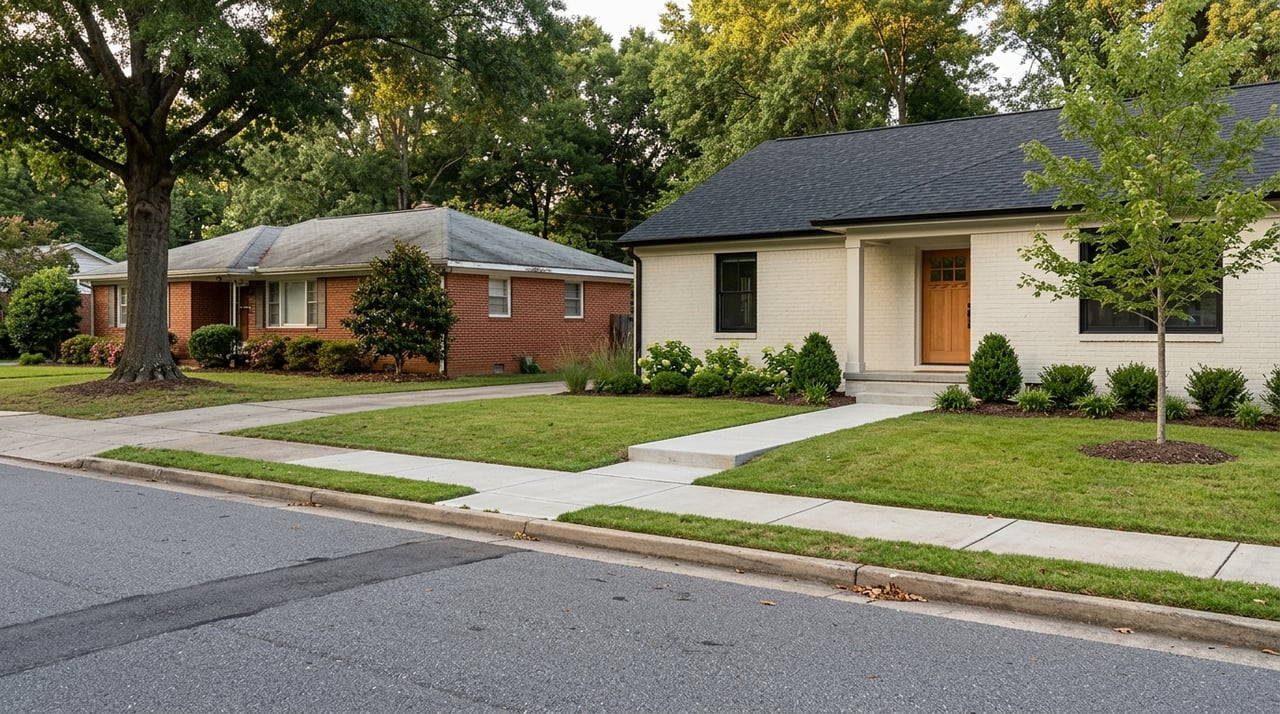
Established streets appeal to buyers who value variety, renovation potential, and a home that may feel more distinct from its neighbors. In Pelham, about 35% of homes were built before 1980, so older housing is a significant part of the local inventory.
These areas often reflect earlier development patterns. City planning documents show that Pelham has about 60 miles of sidewalks compared with roughly 273 miles of roadway, which suggests that many older areas may be less uniform in pedestrian infrastructure than newer plats.
Benefits of established streets
If you are comfortable doing a little more homework, established streets can open up options that newer neighborhoods may not. You may find more varied floor plans, different lot sizes, and homes that invite thoughtful updating over time.
Established streets may be a better fit if you value:
- More varied housing stock
- Renovation or customization potential
- A less standardized streetscape
- Long-term opportunities to update finishes or systems
Pelham also continues to reinvest in older infrastructure. The city’s street resurfacing plan and other public works efforts show ongoing attention to established areas, which matters when you are thinking about the long-term picture.
Tradeoffs to keep in mind
Older homes often require more due diligence. If you are considering an established street, it is smart to pay close attention to the roof, HVAC, plumbing, electrical systems, and any future layout changes you may want.
Pelham’s current code set matters here too. Major remodels, additions, or system replacements may trigger permit and code review, so buyers should budget carefully if they expect to take on substantial work after closing.
Think about your maintenance tolerance
One of the clearest ways to decide between newer subdivisions and established streets is to be honest about your project tolerance. Do you want to spend your first year settling in, or do you feel comfortable planning updates as you go?
If you want lower near-term maintenance and a more turnkey experience, newer subdivisions may better match your lifestyle. If you enjoy the idea of improving a home over time and can handle older-infrastructure cycles, established streets may give you more flexibility.
Compare daily convenience in Pelham
Location inside Pelham matters just as much as the age of the home. Many of the city’s daily-life amenities are concentrated around the Pelham Parkway, Pelham Park Boulevard, and Amphitheater Road area.
The public library is at 2000 Pelham Park Boulevard, the recreation center opened in 2018 at 2020 Pelham Park Boulevard, Park 124 is at 2400 Pelham Parkway, and the Civic Complex is at 500 Amphitheater Road just off I-65. Pelham also has two I-65 exits, which can be helpful if commuting is part of your decision.
For buyers who value entertainment and activity hubs, the Pelham Arts & Entertainment District includes Campus 124, Amphitheater Road, Highway 119, the Pelham Civic Complex & Ice Arena, The Canopy, Oak Mountain Amphitheatre, and nearby dining. Some newer or more planned activity is clustering around these kinds of amenity-rich areas.
Oak Mountain State Park is another major plus on either side of this decision. Since it is located in Pelham and is Alabama’s largest state park, it adds a strong outdoor recreation benefit whether you prefer a new home or an older one.
School zoning depends on the address
If school zoning is part of your home search, it is important to stay address-specific. Pelham City Schools includes two elementary schools, one middle school, and one high school, and the district provides an attendance-zoning map.
That means a newer home is not automatically tied to one school pattern, and an older home is not automatically tied to another. The exact property address is what matters, so this is one detail worth verifying early in your search.
A simple way to choose
If you feel stuck, start with the lifestyle question instead of the house question. Ask yourself what will matter most six months after closing, not just on showing day.
Here is a practical way to think about it:
Choose newer subdivisions if you want
- Lower near-term maintenance
- More uniform lot and street design
- Sidewalks and more planned pedestrian features
- Easy access to newer amenity clusters
- A more turnkey move
Choose established streets if you want
- More variety in housing stock
- Renovation potential
- A home you can update over time
- A less standardized streetscape
- More comfort with older-home due diligence
The best answer is the one that fits you
In Pelham, this is not really a debate about good versus bad. It is a question of fit. The city’s housing mix gives you real options, and the right choice depends on how you want to live, what you want to spend on upkeep, and how much flexibility you want for future changes.
A thoughtful home search should look at the whole picture: house age, infrastructure, location, amenities, commute, and your comfort level with maintenance. When you weigh those pieces together, the right side of the new-versus-established question usually becomes much clearer.
If you are weighing homes across Pelham and want local guidance on which neighborhoods, streets, or subdivisions best match your goals, connect with Sold By The Bell LLC. Their team brings neighborhood-level insight, relocation experience, and a personalized approach to help you move with confidence.
FAQs
Is Pelham a good place to compare newer and older homes?
- Yes. Pelham has a meaningful mix of housing ages, with about 36% of homes built after 2000, 29% built from 1990 to 1999, and 35% built before 1980.
What do newer subdivisions in Pelham usually include?
- Newer subdivisions are more likely to include features required by current city regulations, such as sidewalks, grass strips, street lighting, sewer, water distribution, and hydrants installed before paving.
What should buyers watch for on established streets in Pelham?
- Buyers should do careful due diligence on major systems and future update costs, including the roof, HVAC, plumbing, electrical, and any planned additions or remodels that may require permits and code review.
Are sidewalks more common in newer Pelham neighborhoods?
- In many cases, yes. Pelham’s current subdivision rules require sidewalks in new subdivisions, while city planning documents show that many older streets across the city still lack sidewalk coverage.
Does school zoning in Pelham depend on whether a home is new or old?
- No. School fit depends on the exact property address because Pelham City Schools uses attendance zones.
What Pelham amenities should buyers compare when choosing a neighborhood?
- Buyers often compare access to areas around Pelham Parkway, Pelham Park Boulevard, and Amphitheater Road, along with places like the library, recreation center, Park 124, the Civic Complex, and Oak Mountain State Park.