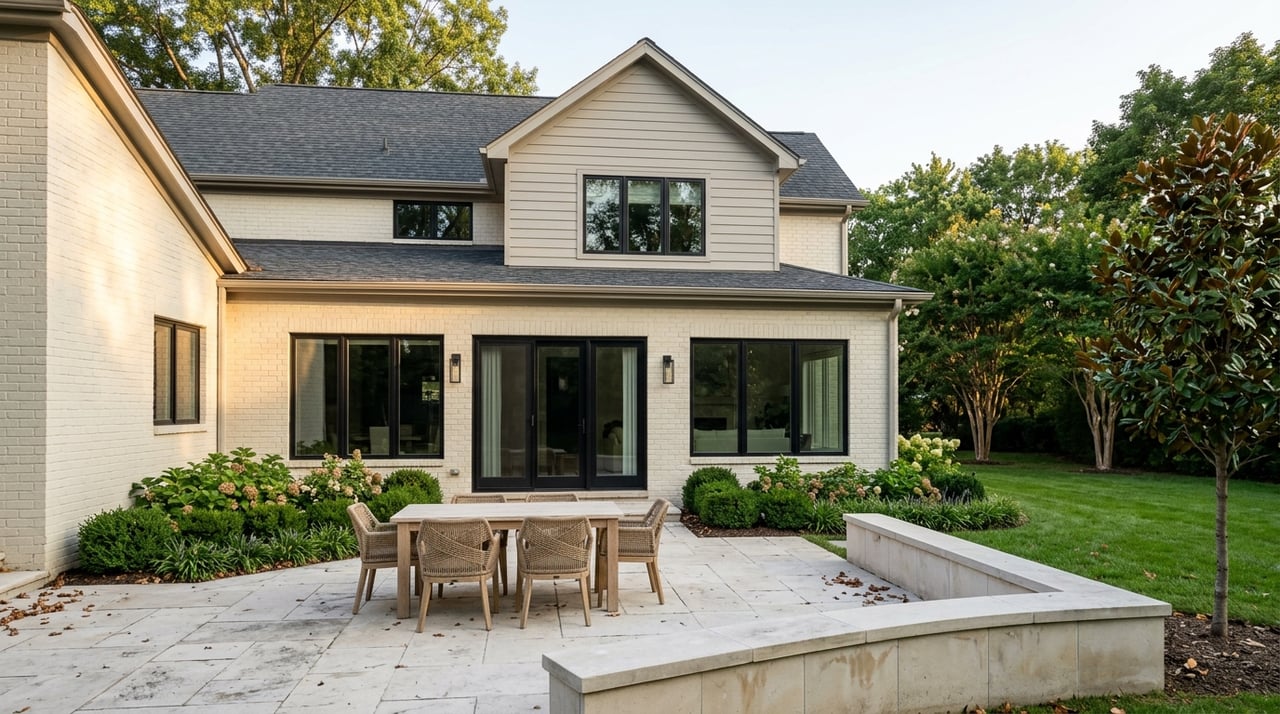
If your current home in Pelham no longer works the way it used to, you are not alone. Maybe you need another bedroom, more flexible living space, a bigger yard, or a layout that better fits your daily routine. The real question is not just whether you want to move up, but whether the numbers, timing, and logistics make sense for your household. Let’s dive in.
Why Pelham Is Worth Staying In
For many homeowners, moving up does not mean moving away. Pelham offers a mix of stability, convenience, and amenities that can make upgrading within the city more appealing than starting over somewhere else.
According to the U.S. Census Bureau QuickFacts for Pelham, the city had an estimated population of 25,396 in 2024, with 9,498 households and an owner-occupancy rate of 83.9%. The same source shows that 88.5% of residents lived in the same house one year earlier, which points to a community where many people put down roots and stay.
Pelham also offers practical lifestyle benefits. The city’s mean travel time to work is 28.6 minutes, which matters if you are trying to gain more space without adding too much time to your commute. Local amenities also help explain why many homeowners would rather trade up in Pelham than leave it behind.
Pelham City Schools includes two elementary schools, a middle school, and Pelham High School, and the district says it has invested in facilities and is planning a future high school. Pelham is also home to Oak Mountain State Park, Alabama’s largest state park at 11,861 acres, with more than 100 miles of trails. Add the city’s Arts & Entertainment District, including the Pelham Civic Complex & Ice Arena, Oak Mountain Amphitheatre, and Campus 124, and it is easy to see why many homeowners want more house without giving up their location.
Start With a Readiness Check
A move-up decision usually works best when you treat it like a readiness check, not a guessing game. Before you look at homes, it helps to ask whether your current home still fits your space needs, your budget, and your routine.
The Consumer Financial Protection Bureau recommends looking closely at your steady income, credit, debt, savings, monthly housing costs, property taxes, insurance, HOA fees, repairs, closing costs, and moving costs before buying again. That is especially important when you are selling one home and buying another at the same time.
If your current home feels tight, outdated for your needs, or less functional than it used to be, that may be a real signal. But it is only one part of the decision. The next question is whether the jump to your next home still leaves you with a payment and cash position that feel comfortable.
The Pelham Price Gap Matters
In Pelham, the biggest move-up story is often the gap between what many homeowners have now and what they may need to pay for the next step up. That gap can be larger than expected.
Recent market sources show different slices of the local market. Zillow’s Pelham home value index placed the average home value at $323,686 as of March 31, 2026, while Realtor.com reported a February 2026 median listing price of $460,069. Those numbers measure different things, so they should be viewed as a range, not a contradiction, but they still help show the size of the potential jump.
That difference is about 42%. In plain terms, many Pelham homeowners considering a move-up purchase may be moving from a current value in the low $300,000s toward active listings in the mid $400,000s.
Using Freddie Mac’s 30-year fixed mortgage rate of 6.30% on April 16, 2026, and assuming 20% down, the principal and interest payment on a $460,069 home would be about $757 more per month than on a $323,686 home. That estimate does not include property taxes, homeowners insurance, HOA dues, or maintenance.
That is why the move-up question is not simply, “Can I qualify?” It is, “Will this new payment still feel manageable after all the real monthly costs are included?”
How Your Equity Can Help
If you have owned your home for a while, your equity may be your biggest tool in making a move-up purchase possible. The CFPB defines home equity as your home’s current value minus what you still owe on your mortgage.
That equity may help cover your next down payment, reduce the amount you need to borrow, and lower your monthly payment. The CFPB’s homebuying guidance notes that a larger down payment lowers monthly payments, and a 20% down payment typically helps you avoid mortgage insurance.
For many Pelham homeowners, this is where the math starts to work. If your current home has built meaningful equity, you may be able to apply those proceeds toward the next purchase instead of pulling as much cash from savings.
The CFPB also explains that a home equity loan or HELOC allows homeowners to borrow against equity. That can help with transition costs, but it also adds risk because your home is used as collateral. If you are considering that option, it is wise to review the numbers carefully before moving forward.
Don’t Overlook Closing and Moving Costs
One of the most common move-up mistakes is focusing only on the purchase price and forgetting the one-time costs around the transaction. Those costs can be significant, especially if you are buying a more expensive home.
According to the CFPB’s homebuying cost guidance, closing costs typically run 2% to 5% of the purchase price. On a $460,069 home, that works out to roughly $9,201 to $23,003 before moving costs, repairs, furniture, or any overlap between homes.
That matters because even a financially strong move-up buyer can feel pressure if too much cash goes out at once. A smart plan leaves room not just for closing, but also for the practical costs that show up right after move-in.
Should You Sell First or Buy First?
For most homeowners, selling first is the more practical path. The CFPB says that if you want to move, you normally try to sell your home first before buying another one.
That approach can help you understand how much equity you will actually have available and reduce the risk of carrying two housing payments at the same time. It also gives you a firmer budget for your next purchase.
Buying first may work for some households with strong savings and flexible financing, but it can add pressure. If your current home has not sold, you may face temporary overlap costs, more uncertainty, and tighter timelines.
In a market where inventory still requires planning, timing matters. The National Association of Realtors reported that existing-home inventory reached 4.1 months’ supply in March 2026, which is better than very tight conditions but still below historical norms, according to its existing-home sales report. That means move-up buyers should prepare carefully rather than assume everything will line up easily.
Talk to a Lender Early
A move-up plan gets much clearer once you talk with a lender. Early conversations can help you estimate your next payment, review your likely loan options, and understand how your current home sale may affect your buying power.
The CFPB notes that sellers often require a preapproval letter before accepting an offer and recommends comparing official Loan Estimates from multiple lenders. You can learn more through the CFPB’s guide on getting a preapproval letter.
This step is especially helpful if you are trying to answer questions like these:
- How much home can you comfortably afford now?
- How much equity is likely available after your sale?
- What would your monthly payment look like with taxes and insurance added?
- Would a larger down payment improve your comfort level?
- How much cash should you keep set aside after closing?
A preapproval does more than set a budget. It helps you move from guessing to planning.
Signs It May Be Time to Move Up
Not every homeowner in Pelham needs to move right now. But if several of these apply to you, it may be worth taking the next step and reviewing your options.
- Your current home no longer fits your daily routine
- You need more bedrooms, office space, storage, or outdoor space
- You want to stay in Pelham for its amenities and convenience
- You have built enough equity to support a larger down payment
- Your income, savings, and monthly budget can support the next payment
- You can handle closing costs and moving expenses without strain
When those pieces start to align, moving up becomes less of a dream and more of a practical next chapter.
The Right Time Is Personal
There is no perfect universal moment to move up in Pelham. The right time is usually when your current home no longer fits, your equity gives you options, and the next payment still feels sustainable in your real life.
That is why a readiness-first approach works so well. It keeps the focus where it belongs: on your household, your finances, and the kind of home that supports the way you want to live next.
If you are weighing whether it is time to move up in Pelham, the best first step is a clear plan. The team at Sold By The Bell can help you understand your current home value, talk through timing, and map out a buying and selling strategy that fits your goals.
FAQs
How do I know if moving up in Pelham is financially realistic?
- Start by reviewing your equity, savings, debt, and expected monthly payment on the next home, including taxes, insurance, and closing costs.
How much equity do Pelham homeowners need to move up?
- The amount varies, but more equity can help cover your down payment, reduce your loan amount, and lower your monthly payment.
Should Pelham homeowners sell before buying their next home?
- In many cases, yes. The CFPB says homeowners normally try to sell first before buying another home.
What is the biggest cost jump for move-up buyers in Pelham?
- The biggest jump is often the difference between your current home value and the price of active move-up listings, plus added taxes, insurance, and closing costs.
What should Pelham buyers ask a lender before touring homes?
- Ask how much you can comfortably afford, what your full monthly payment may be, how your current home sale affects your budget, and what cash you should keep in reserve after closing.